

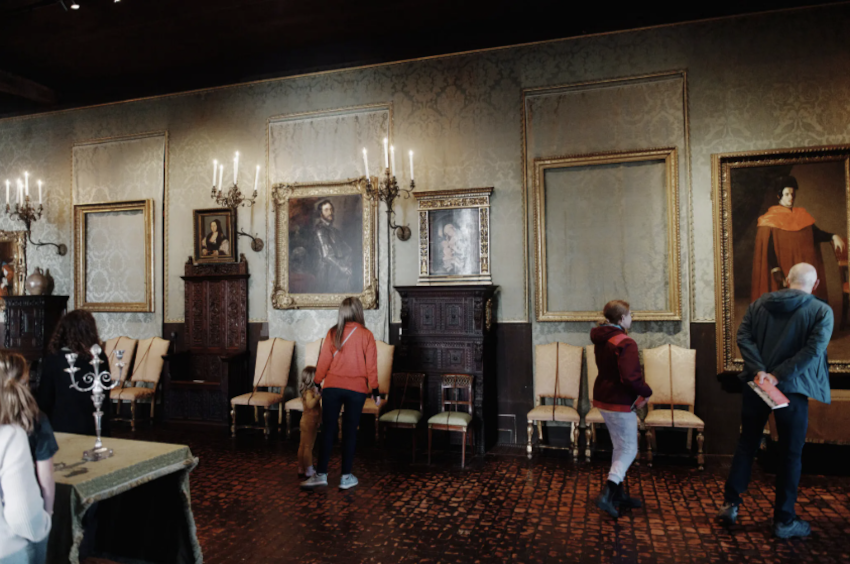
ABOVE: Empty frames remain after thieves disguised as police officers stole 13 masterpieces from Boston’s Isabella Stewart Gardner Museum in 1990, including works by Vermeer, Rembrandt and Degas.
A recent New York Times feature put it plainly: “Hoping nobody steals anything is not a strategy.”
The article, prompted by the brazen daylight robbery of eight of France’s Crown Jewels from the Louver’s Gallery of Apollo, explores how museums worldwide are grappling with a fundamental paradox — the architectural values driving modern museum design (transparency, openness, community) are in direct tension with the demands of security.
It’s a challenge PLANNET knows intimately. The Times highlights multiple institutions PLANNET has worked with as case studies in getting this balance right.
At the Norton Simon Museum in Pasadena, California, a recent campus redesign wove layered perimeter security with textured concrete walls, strategic plantings, lighting, gates, and cameras, all seamlessly integrated into the architecture. The result: a campus that feels more welcoming, while being significantly more secure. As one designer on the project put it, security needs to be considered from the earliest stages; once an architect’s vision is set, it becomes very difficult to change.
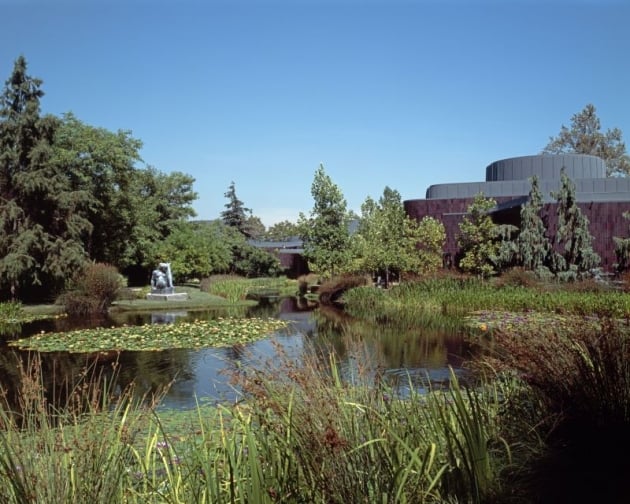
Norton Somin Museum
The Broad in downtown Los Angeles, California, designed by Diller Scofidio + Renfro, which the Times profiles as a leader in reconciling openness with protection, is another institution where PLANNET served as the technology consultant, designing physical infrastructure and AV systems from the ground up.
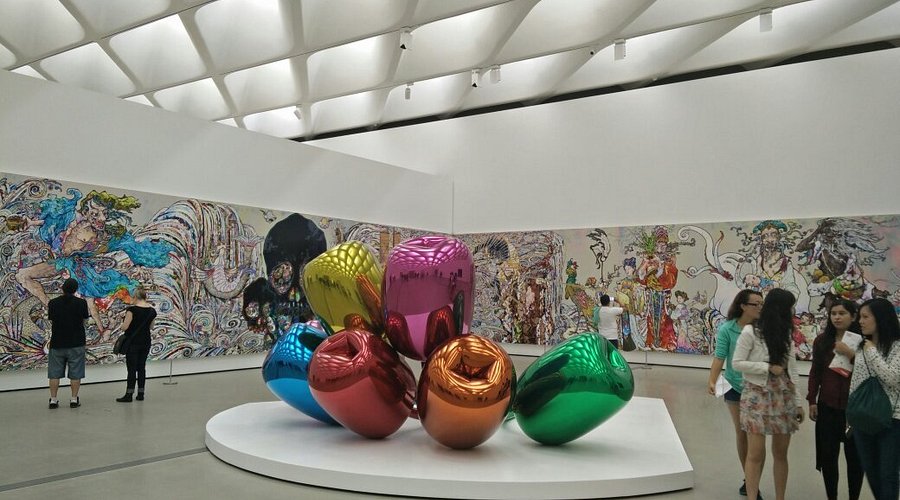
The Broad Museum
And at The Getty, in Los Angeles, where PLANNET designed and oversaw the installation of more than 450 surveillance cameras, access control across 350+ doors and gates, and a fully integrated alarm and intercom system, that infrastructure proved its worth when the January 2025 wildfires threatened both the Brentwood campus and the Getty Villa.
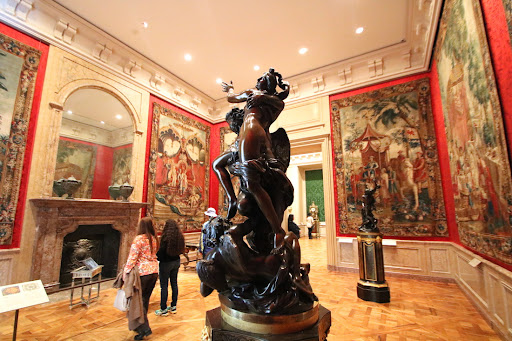
The Getty Museum
The Times notes that today’s most sophisticated security technology and design include RFID tags on paintings, microwave radar motion sensors, and cameras that can monitor entire walls of art simultaneously. But, as one consultant quoted in the article observes, even the best systems require trained people and smart design to back them up; “A camera can’t get off its chair and go check out the bad guy.”
That’s precisely the philosophy behind PLANNET’s Physical Security & Fire Life Safety practice. We integrate threat assessments, access control, video surveillance, intrusion detection, perimeter protection, mass notification, and fire life safety design into architecturally coherent systems — built to protect both priceless collections and the people who experience them, without turning museums into fortresses.
“The PLANNET Security Design team takes these efforts very seriously. We work closely with both the architect and the museum client to ensure our designs are effective while allowing the visitor to enjoy their museum experience.” – David Dickinson, Director, Life Safety Consulting
Security is no longer a bolt-on. It’s a design discipline. The institutions that treat it that way are the ones best positioned to protect what matters most. Is your institution’s security infrastructure keeping pace?
Click Here for information about PLANNET’s Physical Security Technology Design services or to schedule a complimentary consultation with PLANNET’s experts.
Click Here to see the full New York Times article.